TL;DR
- A calorie deficit can reduce body weight, but it does not automatically guarantee fat loss.
- The scale can move because of fat, muscle, water, glycogen, digestive contents, or a mix of several changes.
- Without resistance training and enough protein, the body may lose muscle during dieting.
- As weight drops, metabolism, movement, and energy needs can change, meaning the original deficit may disappear.
- The goal is not just to weigh less. The goal is to direct the body toward fat loss while preserving strength and lean tissue.
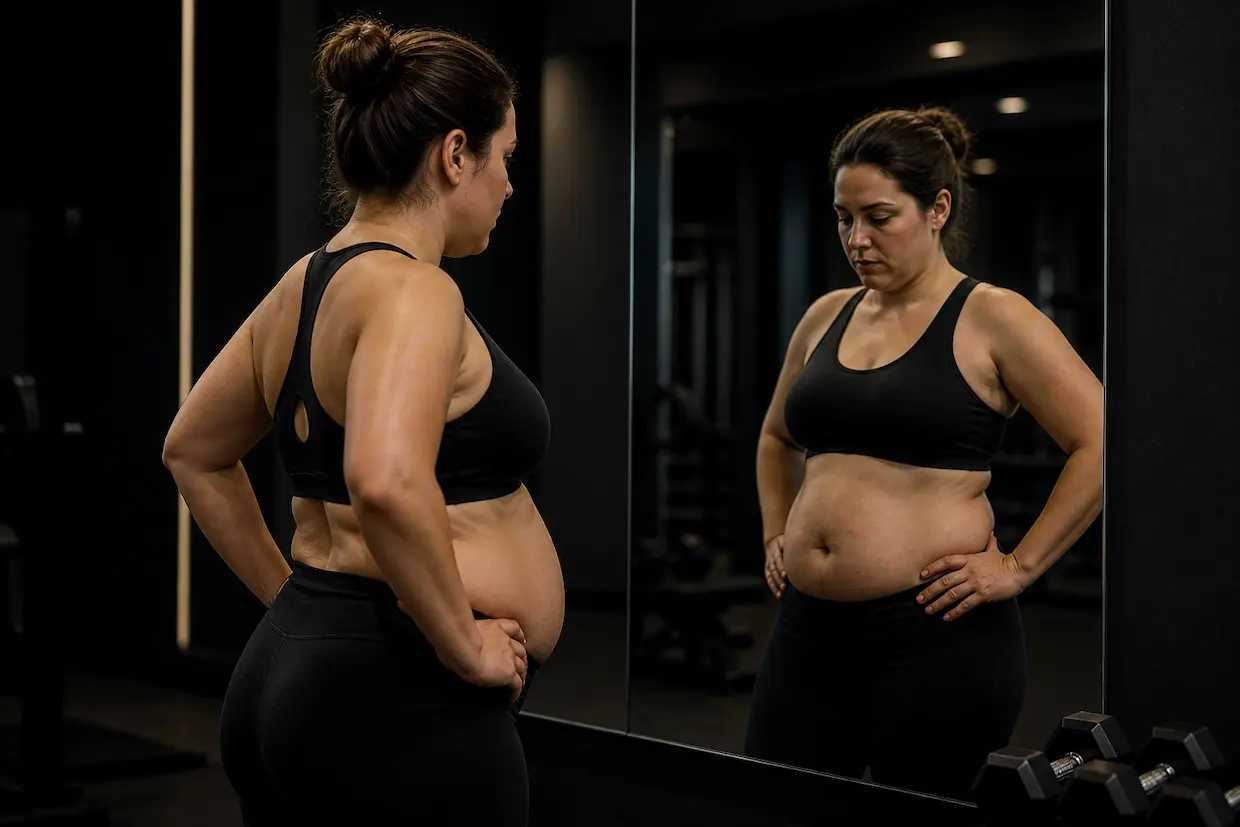
You can reduce calories, stay consistent, and still not lose fat the way you expect.
That is where most people get stuck. The assumption is simple: if you are in a calorie deficit, fat loss should follow.
But the body does not operate on that single variable alone.
A calorie deficit determines whether weight changes. It does not determine what that weight is made of.
That distinction is where most results fall apart.
Body Composition Lens
Weight loss is not the same as fat loss.
Scale weight can change from fat, lean tissue, water, glycogen, digestion, inflammation, or fluid retention. Fat loss is only one part of total weight change.
Weight change ≠ fat change
Weight Loss and Fat Loss Are Not the Same Outcome
When body weight drops, it can come from several sources at the same time.
Fat is only one of them. The rest can come from muscle tissue, water stored within that tissue, glycogen, digestive contents, and fluid shifts.
This is why someone can lose weight and still feel weaker, look flatter, or not see the visual change they expected.
The scale reflects total mass. It does not distinguish between fat and lean tissue.
If the body is not being given a reason to preserve muscle, it becomes more willing to reduce it.
Measure what is actually changing
If you are only tracking scale weight, you are missing the full picture. Use the Body Composition Estimator to understand how fat mass, lean mass, and water contribute to overall changes.
Muscle Loss Changes the Entire Outcome
Muscle is not passive tissue. It influences how the body uses energy, how it responds to food, and how it performs under stress.
When calories drop without sufficient training stimulus, the body looks for ways to reduce its energy demand. Muscle is expensive to maintain. Without a reason to keep it, some of it can be lost.
This is one of the main reasons people see weight loss without meaningful fat loss. The body is adapting, just not in the direction they expected.
This same pattern is commonly seen in medication-driven weight loss, where appetite is reduced but muscle is not protected without resistance training, as explained in GLP-1 Weight Loss and Muscle Loss.
Your Calorie Deficit May Not Be What You Think
Another layer of confusion comes from the assumption that a calorie deficit is static.
It is not.
As body weight drops, energy requirements change. Movement patterns shift. The body becomes more efficient. In some cases, subconscious activity decreases without being noticed.
This means a deficit that worked weeks ago may no longer exist, even if nothing appears to have changed.
At the same time, tracking inaccuracies accumulate. Small miscalculations in portion size, intake, cooking oils, drinks, snacks, or energy expenditure can close the gap entirely.
From the outside, it feels like the deficit stopped working. In reality, the conditions changed.
01
Lower Output
Daily movement and training performance can drop when calories stay low.
02
Water Shifts
Stress, sodium, glycogen, hormones, and inflammation can mask fat loss.
03
Lean Mass Loss
Without lifting and protein, some weight loss can come from muscle.
Training Determines What the Body Keeps
The body responds to demand.
If resistance training is present, muscle is treated as necessary. If it is not, muscle becomes more optional.
This is why strength training plays a central role in body composition. It provides the signal that tells the body to preserve lean tissue while weight is being reduced.
Cardio alone does not create that same signal. It contributes to energy expenditure, but it does not strongly influence whether muscle is maintained.
The distinction between these approaches becomes more important when time and recovery are limited, which is explained further in Weights vs Running.
Support the signal with proper intake
Training gives the body a reason to preserve muscle. Protein provides the material to support it. Use the Protein Calculator to estimate an appropriate intake based on your goal and current body weight.
Water and Glycogen Can Mask Progress
Not all fluctuations are fat-related.
Muscle stores glycogen, and glycogen holds water. Changes in food intake, especially carbohydrates, can shift these levels quickly.
This can cause the scale to move up or down independent of fat loss.
In some cases, fat is being lost while water fluctuations mask the change entirely.
That is why short-term measurements often create confusion. The body is adjusting multiple systems at once.
This interaction between hydration, glycogen, and performance is explained in more detail in What Water Actually Does in the Body.
The Real Constraint Is Not Just Calories
Calories matter, but they are not the only variable.
Body composition is influenced by training stimulus, protein intake, recovery, hydration, stress, sleep, and how consistently those variables are applied.
When one of these breaks down, the outcome changes.
This is why two people can follow similar calorie targets and produce completely different results. The structure behind the deficit determines what the body does with it.
What to Do Instead
The solution is not to panic every time the scale does something strange.
The better approach is to track multiple signals and make changes based on patterns, not single weigh-ins.
Use waist measurement, strength performance, progress photos, body composition estimates, sleep quality, hunger, training output, and weekly average weight.
If those signals show no change over time, the plan needs adjustment. If the scale is stuck but measurements, strength, and appearance are improving, the scale may be hiding progress.
What to Check Before Cutting Calories Again
- A calorie deficit determines whether body weight changes, but not whether the weight comes from fat, muscle, or water.
- Muscle loss can make someone lighter without producing the body composition change they expected.
- Energy needs can fall as weight drops, which means a previous deficit may no longer be a deficit.
- Resistance training provides the signal to preserve lean tissue during fat loss.
- Protein, hydration, recovery, and consistent measurement all influence the final outcome.
If the Scale Is Stuck
A calorie deficit determines whether weight changes. It does not guarantee fat loss.
Without resistance training, the body may reduce muscle. Without sufficient protein, it may lack the resources to maintain it. Without consistency across all variables, the outcome becomes unpredictable.
The goal is not just to lose weight. The goal is to direct what the body loses.
Food logs are useful, but they are still estimates. When researchers compare self-reported intake with doubly labeled water, people commonly report less energy than they actually consume. That is a measurement problem, not a character flaw.[1]
Weight loss can also reduce energy expenditure beyond what a smaller body alone would predict, and resistance training can help preserve lean mass during calorie restriction. Neither effect makes energy balance disappear; they change the size and quality of the result.[2][3]
Short-term scale changes may be water rather than fat. One study found an average increase of roughly half a kilogram during menstruation, largely explained by extracellular fluid.[4]
Research and References
These sources support the sections on intake accuracy, metabolic adaptation, lean-mass retention, and water-related scale changes.
- Hill and Davies. “The validity of self-reported energy intake as determined using the doubly labelled water technique.” This review found that self-reported intake is commonly underestimated across different populations. View on PubMed.
- Rosenbaum and Leibel. “Adaptive thermogenesis with weight loss in humans.” This review explains the reduction in resting and non-resting expenditure that can accompany weight loss. View on PubMed.
- Sardeli et al. “Resistance Training Prevents Muscle Loss Induced by Caloric Restriction in Obese Elderly Individuals.” This meta-analysis found that resistance training substantially reduced lean-mass loss during dieting in the studied population. View on PubMed.
- Changes in body weight and body composition during the menstrual cycle. The observed short-term increase was primarily associated with extracellular water. View on PubMed.
FAQ
Can you be in a calorie deficit and not lose fat?
Yes. A deficit can reduce body weight, but the change may come from water, glycogen, digestive contents, or muscle instead of fat.
Why is the scale not moving in a calorie deficit?
Water retention, glycogen changes, digestion, menstrual cycle shifts, stress, sodium, and tracking errors can all mask fat loss on the scale.
Can you lose weight but not look leaner?
Yes. If weight loss includes muscle or water loss, the body can become smaller without looking significantly leaner or more defined.
Does strength training help fat loss?
Strength training helps preserve lean tissue during fat loss and gives the body a reason to keep muscle while calories are lower.
Can eating too little slow progress?
Eating too little can reduce training performance, daily movement, recovery, and lean mass retention, which can make body composition outcomes worse.
How do you know if you are losing fat or muscle?
Track strength, measurements, progress photos, body composition estimates, and how clothes fit instead of relying only on scale weight.
Why did my deficit stop working?
As body weight drops, energy needs often decrease. Lower movement, tracking drift, and metabolic adaptation can also reduce the size of the deficit.
What matters most for fat loss quality?
Fat loss quality depends on a controlled deficit, resistance training, adequate protein, hydration, recovery, and consistent measurement.