TL;DR
- Female body proportions are shaped by waist circumference, hip structure, glute development, shoulder balance, posture, and body composition.
- Waist-to-hip ratio is useful, but it should not be treated as the only measure of shape or progress.
- Training can build glutes, shoulders, thighs, and posture. It cannot change pelvis width or bone structure.
- Waist reduction comes mostly from body composition, not ab exercises or spot reduction.
- The best strategy depends on the bottleneck: waist, glutes, shoulders, lower-body balance, or overall recomposition.
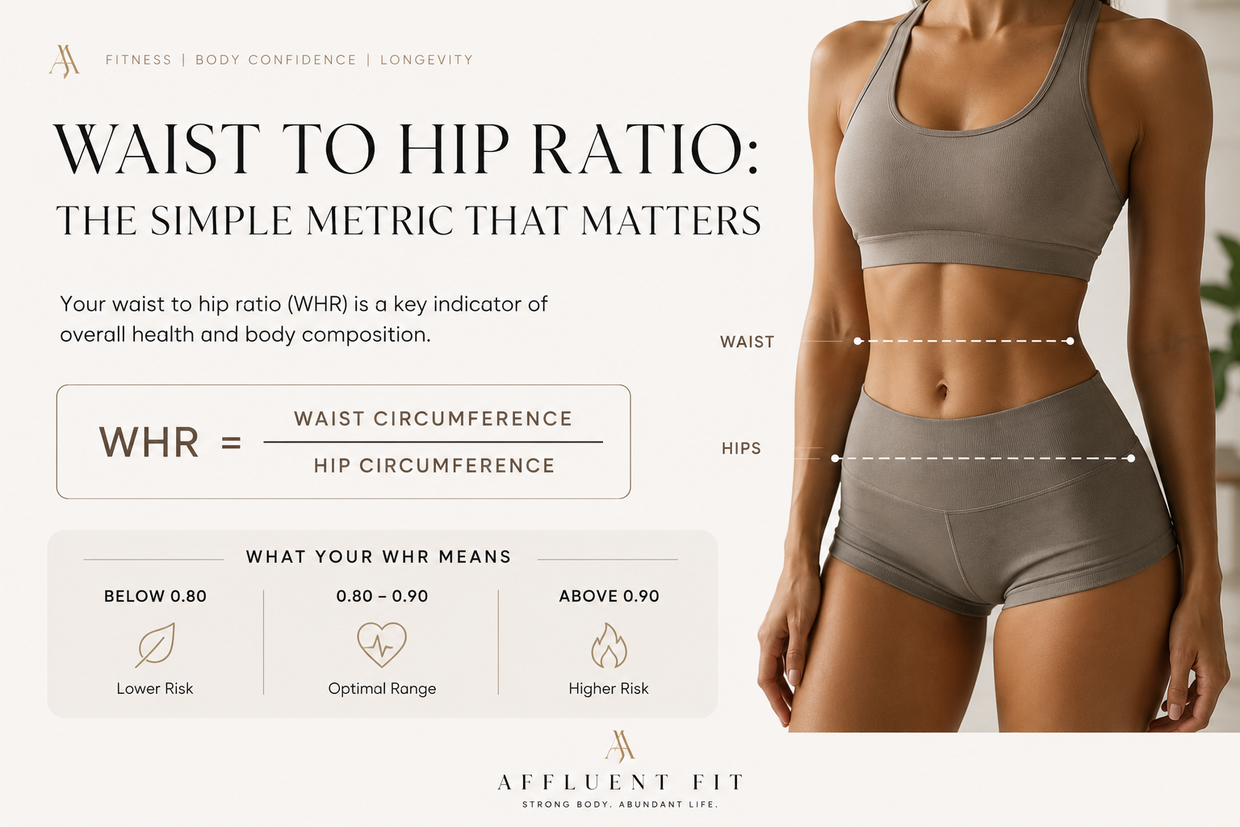
Female body proportions are often reduced to one number: waist-to-hip ratio.
That number can be useful, but it is incomplete. A ratio can show the relationship between waist and hips, but it does not explain where the shape is coming from, what can be changed, or what training should prioritize.
The body is shaped by several overlapping factors: pelvis structure, glute muscle, waist circumference, rib cage position, shoulder balance, posture, body fat distribution, and lean mass.
That is why two women can have similar scale weight and completely different shapes. One may carry more muscle through the glutes and lower body. Another may have a smaller waist but less lower-body structure. Another may have the same measurements but different posture, body fat distribution, or training history.
As Felix Tsatryan emphasizes in coaching, proportions are useful when they help guide action. They become a problem when they are treated as rigid rules.
Core Formula
Waist divided by hips.
Waist-to-hip ratio can help identify whether the highest-return path is waist control, glute development, or balanced recomposition.
30 inch waist / 42 inch hips = 0.714
What Waist-to-Hip Ratio Actually Measures
Waist-to-hip ratio is calculated by dividing waist circumference by hip circumference.
A smaller number usually means the waist is smaller relative to the hips. A larger number usually means the waist is closer in size to the hips.
A common aesthetic reference range is often discussed around 0.67 to 0.75. That range is not a law. It is a planning reference.
The number becomes useful only when paired with context. A ratio can change because the waist gets smaller, the hips get larger, or both. Those are different strategies with different physiology.
Calculate the ratio and the bottleneck
Use the Body Proportion Calculator to compare waist-to-hip ratio, shoulder-to-waist ratio, and supporting measurements so the plan is based on the current bottleneck.
Why Structure Matters
Pelvis width, rib cage shape, femur angle, torso length, and clavicle width influence the starting point.
Training cannot change the width of the pelvis. It can change the muscle around it, the way the body is carried, and the amount of body fat sitting over the structure.
That distinction matters because some goals are trainable and some are structural.
Glute development is trainable. Shoulder balance is trainable. Posture is trainable. Waist circumference can often be changed through body composition. Bone width is not trainable.
A good plan respects the frame and improves what can actually be improved.
The Physiology Behind Shape
The visual shape of the body is created by where muscle exists, where fat is stored, how the skeleton is built, and how the body is positioned.
Glute muscle contributes to hip projection, side shape, and lower-body structure. The glute max drives much of the rear shape. The glute medius and minimus contribute to upper outer hip shape and pelvic stability.
Hamstrings and quads matter too. A lower body with developed glutes but no thigh structure can look incomplete. A stronger lower body usually looks more athletic, even when the goal is aesthetic.
Shoulders also matter. Moderate delt development can improve posture and make the waist appear smaller by creating more upper-body balance. This does not mean chasing a bulky look. It means building enough structure to frame the torso.
The waist is influenced by body fat, visceral fat, bloating, posture, rib position, breathing mechanics, and trunk control. Ab exercises can improve control, but they do not burn fat specifically from the waist.
01
Waist Control
Usually driven by body composition, posture, digestion, and trunk control.
02
Glute Structure
Built through hip extension, hinges, split squats, step-ups, and abduction work.
03
Shoulder Balance
Helps frame the waist and improve posture without needing excessive size.
How to Improve Female Body Proportions
The best training plan depends on what is limiting the current shape.
Some people need waist reduction. Some need glute development. Some need more shoulder balance. Some need lower-body structure. Some need overall recomposition because the issue is not one measurement, but the relationship between fat mass, lean mass, and posture.
If Waist Circumference Is the Limiting Factor
Waist circumference usually changes through body composition, not isolated abdominal training.
A smaller waist can come from reducing body fat, improving digestion and bloating patterns, managing alcohol and high-calorie liquid intake, improving sleep, reducing stress load, and building better trunk control.
Training should include resistance training 3-4 times per week, daily walking, and conditioning that supports the goal without overwhelming recovery.
Core work should focus on control: dead bugs, side planks, Pallof presses, farmer carries, breathing drills, and controlled bracing. The goal is posture and trunk function, not endless crunches.
Measure body composition, not just weight
Waist changes can come from fat, water, digestion, posture, or muscle retention. Use the Body Composition Estimator to track the bigger picture.
If Glute Development Is the Limiting Factor
Glute development requires progressive resistance training. Random band circuits and light activation drills are not enough for most people.
The glutes need tension, range of motion, progressive overload, and enough recovery.
Useful exercises include hip thrusts, Romanian deadlifts, Bulgarian split squats, step-ups, cable kickbacks, 45-degree back extensions with a glute bias, and hip abductions.
Most people need 12-20 hard weekly glute sets across 2-4 sessions, adjusted for recovery and training age.
If Shoulder Balance Is the Limiting Factor
Shoulders can improve the visual frame of the torso. This is especially useful when the waist is already controlled but the upper body looks narrow or posture collapses forward.
Cable lateral raises, machine lateral raises, rear delt flyes, face pulls, and cable Y raises are useful because they target shape and posture without requiring maximal loading.
Moderate shoulder development can make the waist look more defined while improving upper-body balance.
If Lower-Body Balance Is the Limiting Factor
The lower body is not just glutes. Quads, hamstrings, adductors, calves, and glutes all contribute to the final shape.
A balanced lower-body plan can include squats or leg press, Romanian deadlifts, split squats, leg curls, step-ups, calf raises, and abduction work.
The goal is not simply to add size. The goal is to build useful structure in the areas that improve the overall proportion.
Why Scale Weight Can Mislead You
Scale weight does not show where change is happening.
A woman can weigh the same and look different if she gains glute muscle, loses waist fat, improves posture, or shifts water and glycogen. She can also lose scale weight and look less athletic if lean mass drops.
That is why body composition and measurements matter more than weight alone.
The better question is not only, “Did the scale change?” It is, “What changed?”
Support shape with enough protein
Glute development, recomposition, and lean mass retention all require adequate protein. Use the Protein Calculator to estimate a practical daily target.
What the Calculator Can and Cannot Tell You
A calculator can identify the relationship between measurements. It can show whether waist, hips, shoulders, thighs, or calves appear to be the highest-return focus.
It cannot know your exact bone structure, injury history, hormone status, training skill, or recovery capacity.
That means the output should guide the plan, not replace judgment.
The best use is simple: measure consistently, identify the bottleneck, train the right area, and reassess over time.
What the Ratios Are Useful For
- Waist-to-hip ratio is useful, but it does not explain the whole shape by itself.
- Glutes, shoulders, thighs, posture, and body composition all influence female proportions.
- Training can build muscle and improve posture, but it cannot change bone structure.
- Waist reduction is mostly driven by body composition and lifestyle consistency, not ab exercises.
- The best strategy depends on whether the bottleneck is waist, glutes, shoulders, lower-body balance, or overall recomposition.
Waist-to-hip ratio has been studied both as a visual proportion and as a rough marker of fat distribution. Those are different uses: a physique-planning ratio is not a diagnosis, and no single number represents a universal standard of attractiveness.[1]
Large population studies do show that greater abdominal fat distribution is associated with higher cardiovascular and all-cause mortality risk. That supports paying attention to the waist, but individual medical risk still requires more than one tape-measure calculation.[2][3]
Research and References
These studies clarify the difference between visual proportion, body-fat distribution, and health risk.
- Singh. “Adaptive significance of female physical attractiveness: role of waist-to-hip ratio.” This foundational study examined how WHR influenced perceived attractiveness and proposed biological interpretations. View on PubMed.
- Czernichow et al. “Body mass index, waist circumference and waist-hip ratio.” This individual-participant meta-analysis linked abdominal-adiposity measurements with cardiovascular mortality. View on PubMed.
- Jayedi et al. “Central fatness and risk of all cause mortality.” This dose-response meta-analysis of prospective cohorts examined waist-related measurements and long-term risk. View on PubMed.
FAQ
What is waist-to-hip ratio?
Waist-to-hip ratio is waist circumference divided by hip circumference. It is useful as a visual and body composition reference, but it is not a complete physique standard.
What is a good waist-to-hip ratio for female proportions?
A common aesthetic reference range is roughly 0.67-0.75, but structure, muscle, posture, and measurement method all affect interpretation.
Can training change waist-to-hip ratio?
Yes, training can help by supporting fat loss, improving trunk control, and building glute muscle. It cannot change pelvis bone width.
Do glute exercises make hips wider?
Glute training can add muscle around the hips and improve shape, but it does not widen the pelvis itself.
Do ab exercises make the waist smaller?
Ab exercises can improve posture and trunk control, but they do not spot-reduce waist fat. Nutrition, energy balance, and training consistency drive waist reduction.
Should women train shoulders for better proportions?
Yes. Moderate shoulder training can improve upper-body balance, posture, and the visual contrast of the waist without requiring excessive size.
Is scale weight enough to judge female body shape?
No. Scale weight does not show fat mass, lean mass, body water, muscle distribution, or where visual changes are happening.
What is the best training focus for female proportions?
The best focus depends on the bottleneck. Most plans involve glute development, waist control, lower-body balance, posture, and enough resistance training to preserve lean tissue.